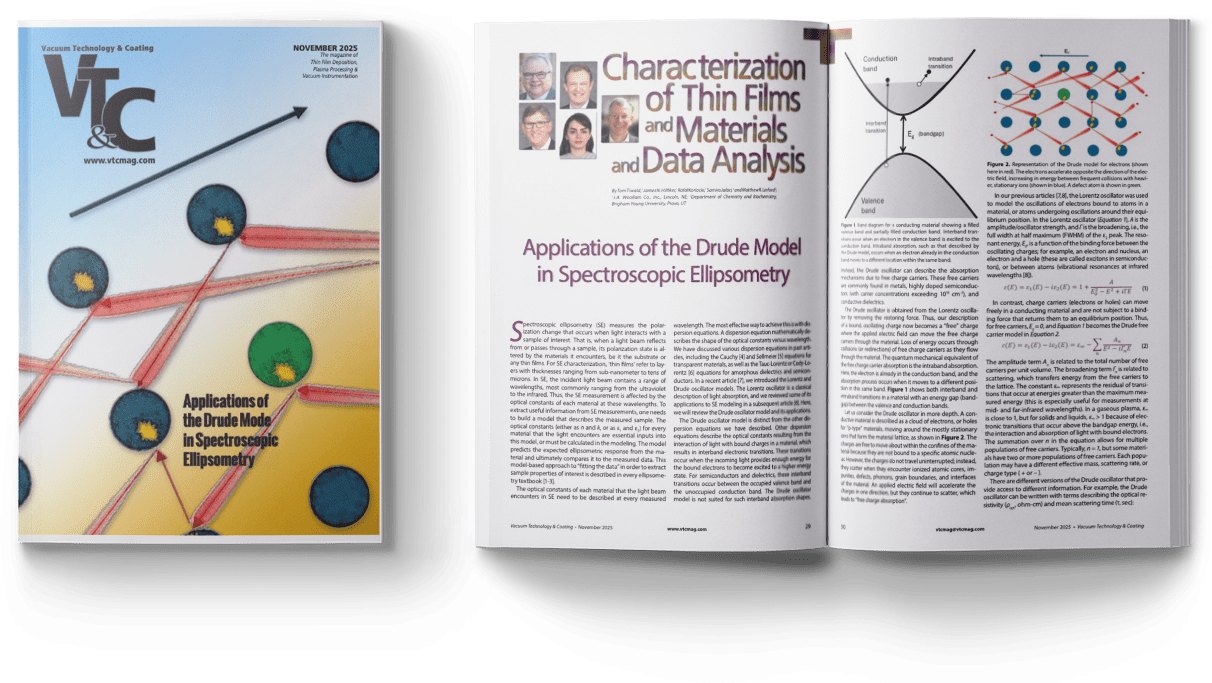
Applications of the Drude Model in Spectroscopic Ellipsometry
Dr. Matthew Linford and Team


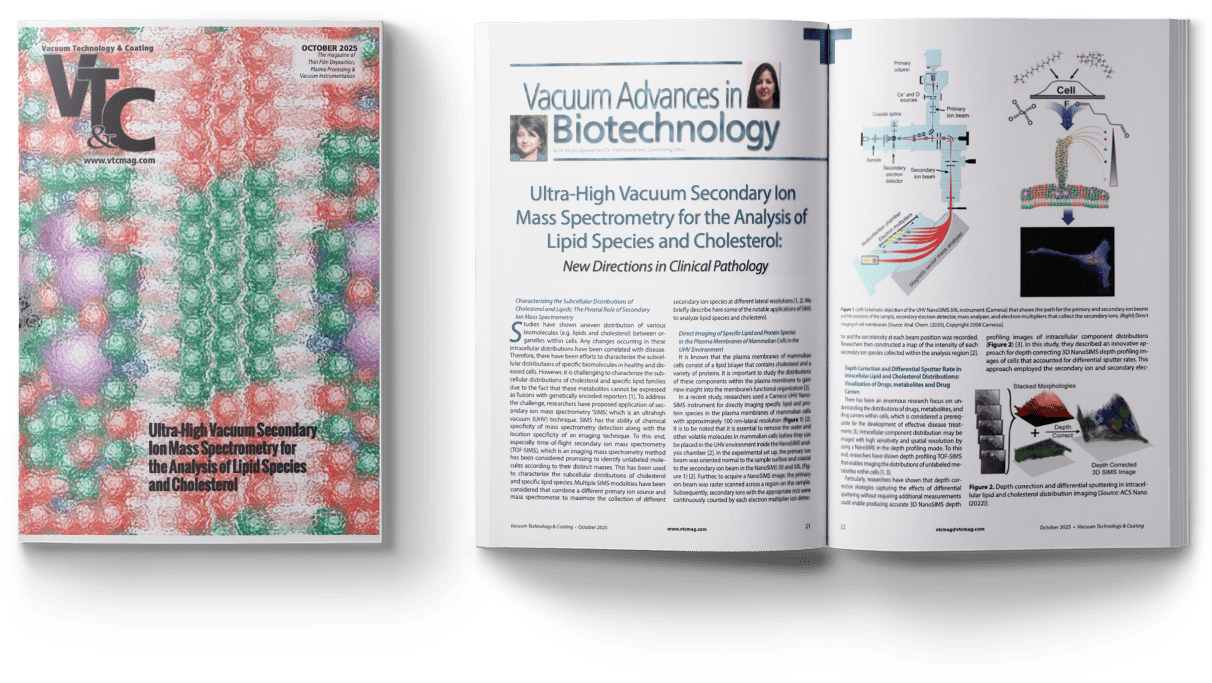
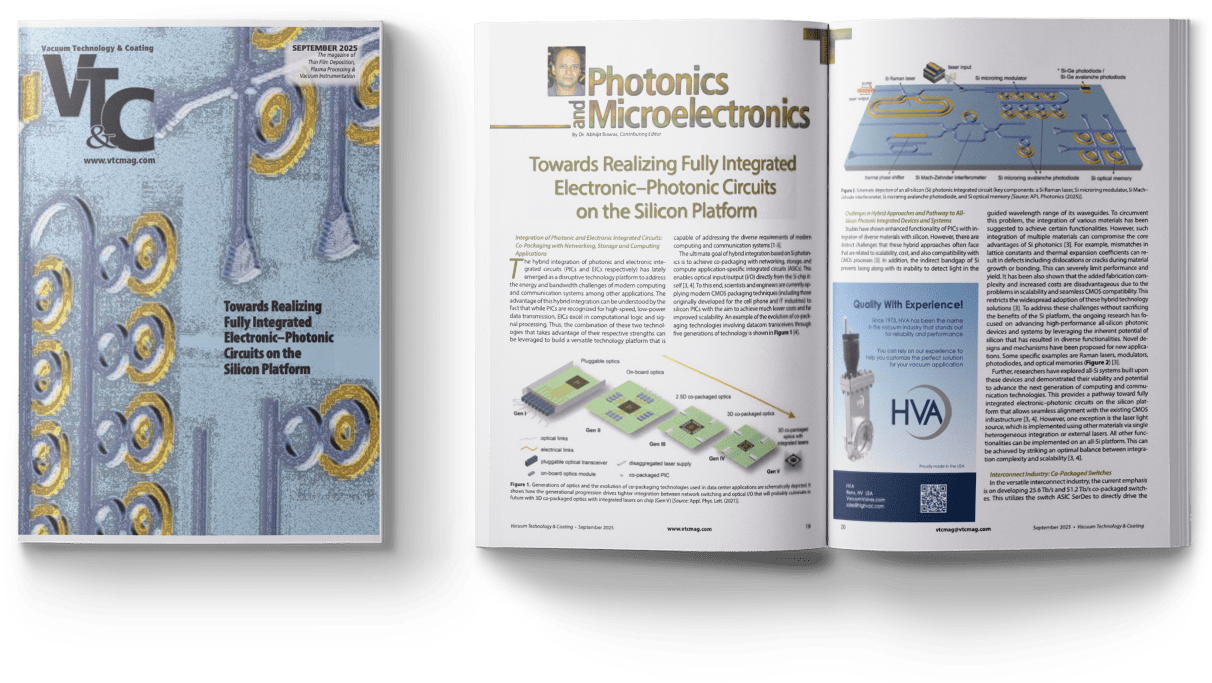
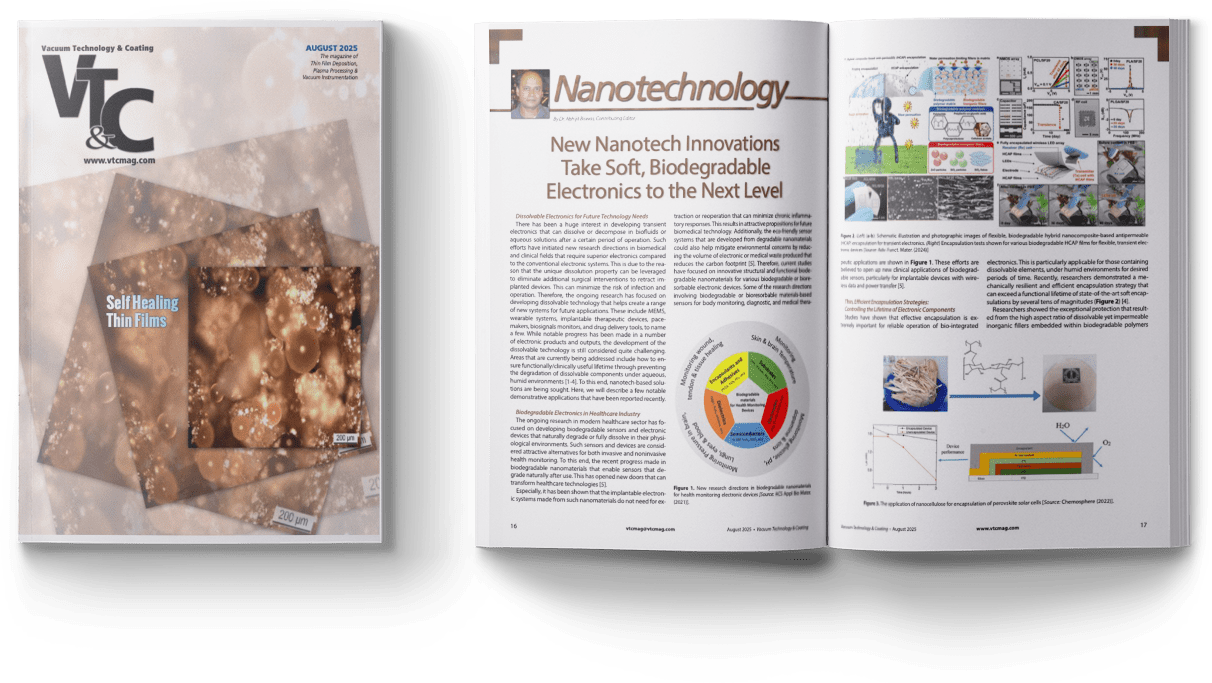
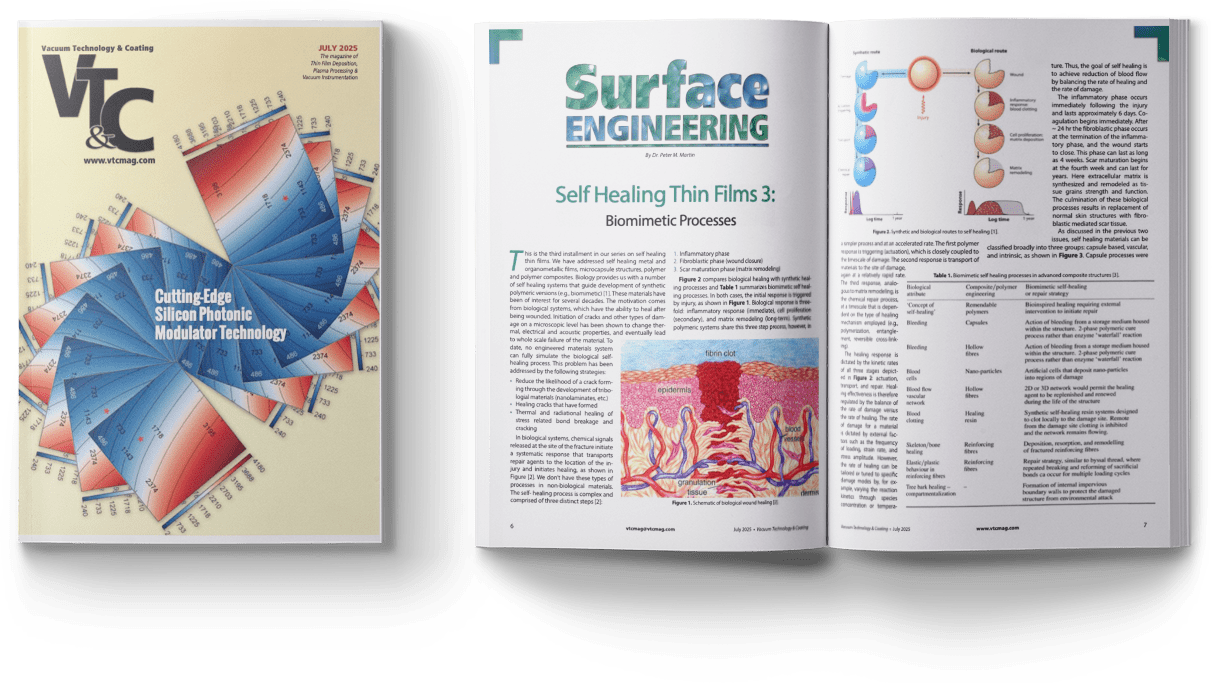
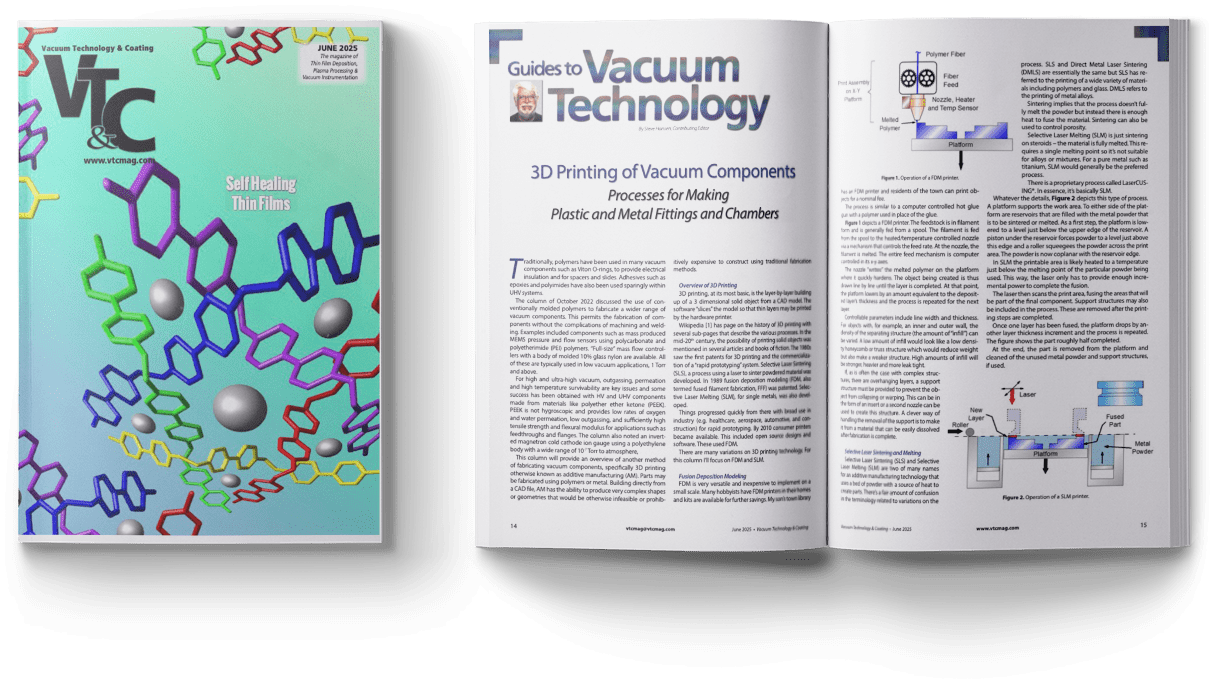
Electronics have been transforming from rigid, lifeless systems into adaptive, living platforms capable of seamlessly interacting with biological environments. Researchers at Binghamton University are pioneering "living metal" composites embedded with bacterial endospores, paving the way for dynamic communication and integration between electronic and biological systems. (Click for more)
VON ARDENNE has introduced its new OPTA X300 deposition tool and the opening of ISO 5 and ISO 7 cleanrooms in Dresden, Germany. The company will unveil its new solutions during SEMICON West, taking place October 7-9 in Phoenix. (Click for more)
Hiden Analytical is proud to announce the launch of the ECL Series — a new range of versatile electrochemical accessories for the HPR-40 DEMS, making a turnkey system for the real-time analysis of gases and volatile species in electrochemical research, empowering researchers with new levels of flexibility and precision. (Click for more)
UC Components’ laser head marking service is designed to integrate seamlessly with our proprietary RediVac® process, delivering an even greater level of control, traceability, and assurance for our customers. (click for more)





Since 2000 Vacuum Technology & Coating Magazine has been the industry's leading source for the latest articles, news, and product and service information. Below we describe some of the terms that you will find in a typical issue of VT&C.
Vacuum Coating (Vacuum Deposition and Thin Film Deposition) is the process of depositing a film or other material atom by atom or molecule by molecule onto a surface in a low pressure environment or vacuum.
Physical Vapor Deposition or PVD refers to vacuum deposition methods which involve the material (which is being deposited) going from a condensed phase to a vapor phase and then to a thin film condensed phase. Sputtering and evaporation are common PVD processes.
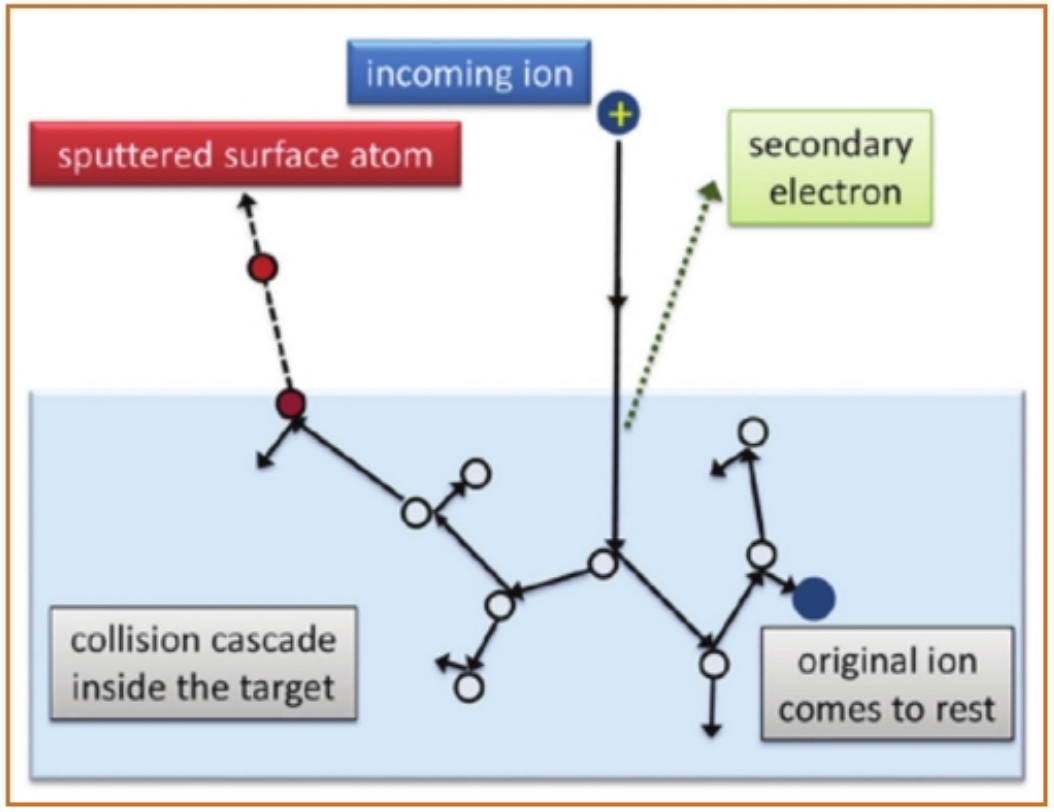
Sputtering refers to a type of process used to deposit thin films and employs a plasma to bombard and eject atoms from a target source.
Evaporation refers to the heated source material being evaporated in a vacuum. Vacuum allows vapor particles to travel directly to the target object, where they condense back to a solid state. (called a Deposition Source) refers to a type of process used to deposit thin films and employs a plasma to bombard and eject atoms from the target source (called a Deposition Source).
Vacuum Hardware refers to the types of hardware and components that are used in the vacuum process. There are many types of hardware used in this process, some examples are flanges, fittings, seals, valves, and chambers.
Thin Film Metrology involves determining the optimal thickness, composition and/or condition of a coating through various techniques and mathematical calculations.
Gas Analytical Systems are used in the analysis of residual gases within a low pressure environment or vacuum.
Vacuum Pumps are devices that remove gas atoms and molecules for the purpose of leaving behind a partial vacuum. Some examples of types of vacuum pumps are rotary vane pumps, diaphragm pumps, and scroll pumps.
Every issue of VT&C includes a product showcase focused on a specific topic relevant to Vacuum Processing, please see our 2026 editorial calendar which lists the topic for each issue.